BFA: Graphic Design
School of Art
Rigorous inquiry, fearless exploration
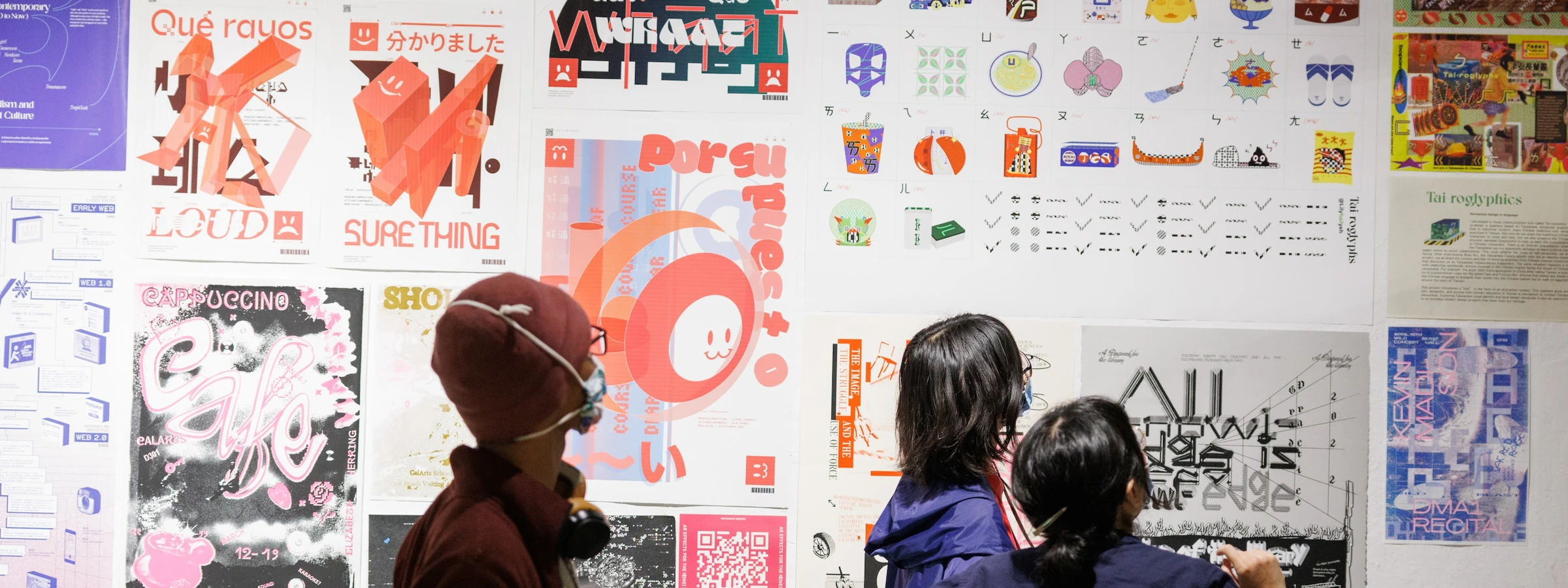
In CalArts’ four-year BFA in Graphic Design program, the next generation of graphic designers endeavors to develop individual interests and lines of exploration that challenge traditional structures and value systems of design, criticism, theory, and practice. Working in residence in communal studios (open 24/7), students are trained in a full range of design practices, from print and publication design, web and interface design, and motion graphics for web and film, to branding, identity, and type design. With the support of their faculty-colleagues in small, intimate, and critique-based classes, students learn the skills, both practical and conceptual, to build their practice as designers as well as preparing for careers in education, cultural organizations, and more.
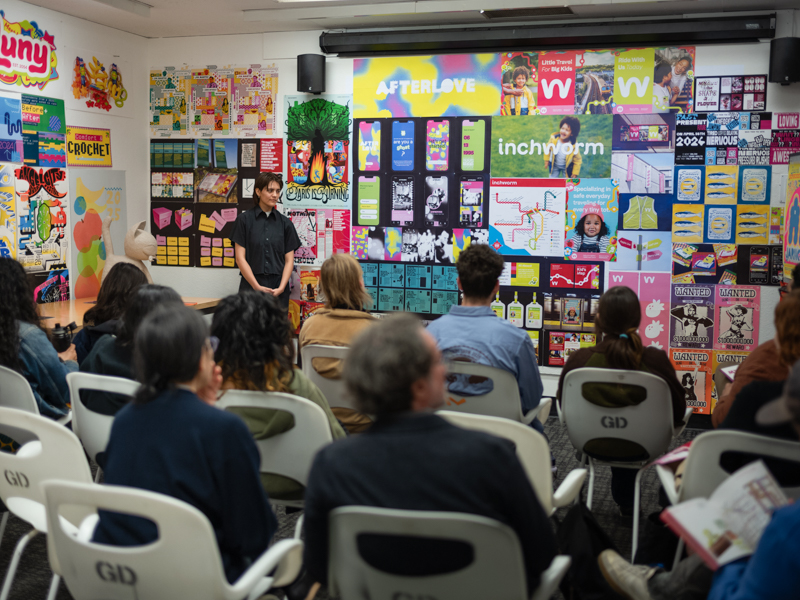
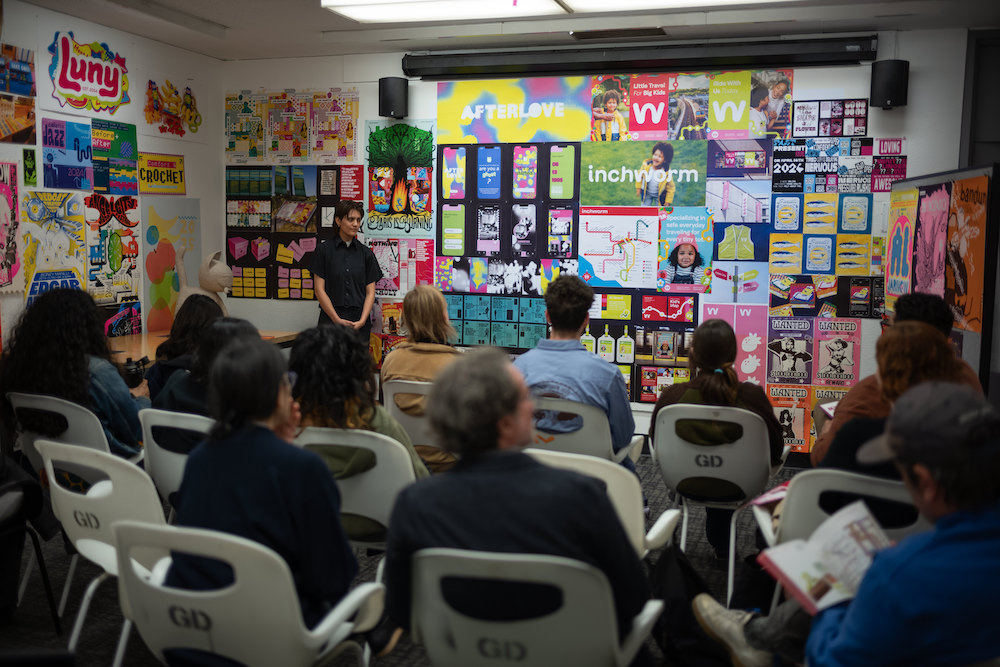
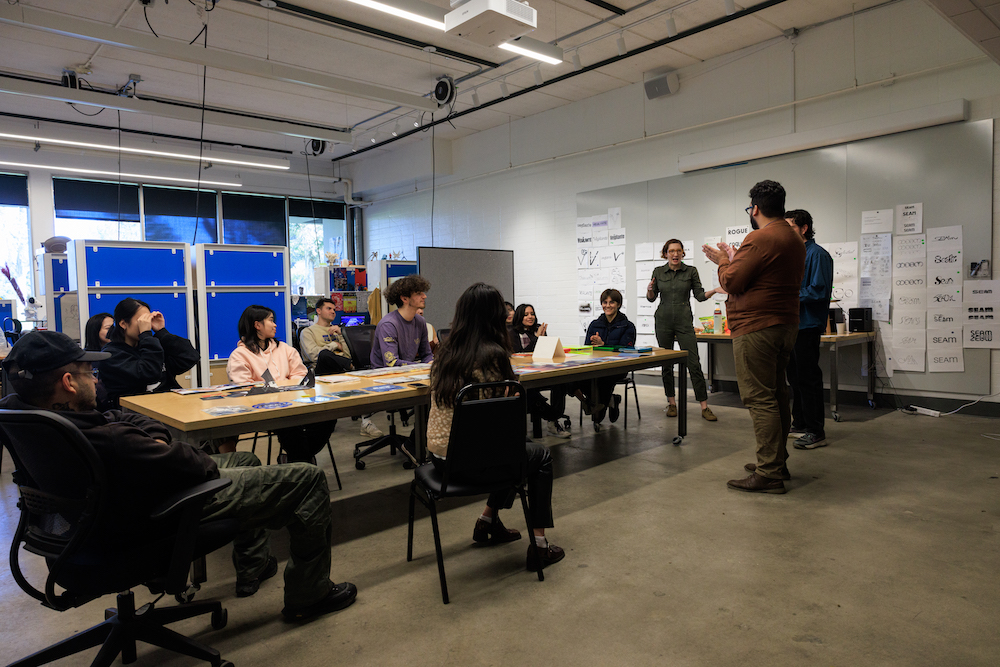
Maya Alvarado (BFA 25) makes an end-of-year presentation.
Meet the faculty
At CalArts, faculty and students are collaborators, teaching, learning, and working together as members of our community of artists.
-
School of Art;
Assistant Dean;
Faculty, Graphic DesignImage
-
School of Art;
Associate Program Director;
Faculty, Graphic DesignImage
-
School of Art;
Faculty, Graphic DesignImage
-
School of Art;
Visiting Faculty, Graphic DesignEmail address: birish@calarts.eduPhone number: 661-200-6053Image
What will you make?
Student Work
Seven cohorts, 167 projects. Get inspired by Graphic Design’s work from 2025.

Maya Alvarado, BFA Graphic Design 2025
Poster culture
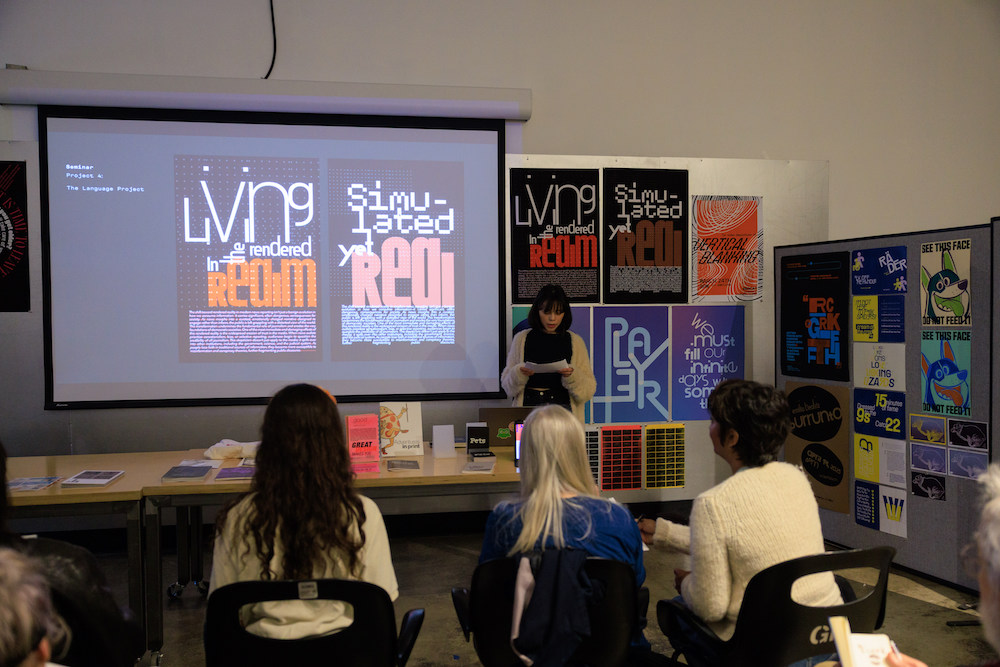
CalArts’ Poster Archive includes 50 years’ of student-designed and printed posters for campus lectures and performances. The small, self-contained audience and short time they hang in the hallways allow for a high level of experimentation and risk-taking, making the posters as much about the agenda of the individual designer as the event itself.

Jose Allard (MFA 98)
Dive into the essentials
Get a feel for the basics of graphic design now
Check out courses from CalArts Extended Studies, including Fundamentals of Graphic Design taught by program director Michael Worthington (recipient of the 2023 Coursera Career Transformation Award). Perfect for anyone wanting to explore the field, build foundational skills, or see what it’s like to study with us—many students who took this course on Coursera are now studying in the degree program at CalArts!
Gallery
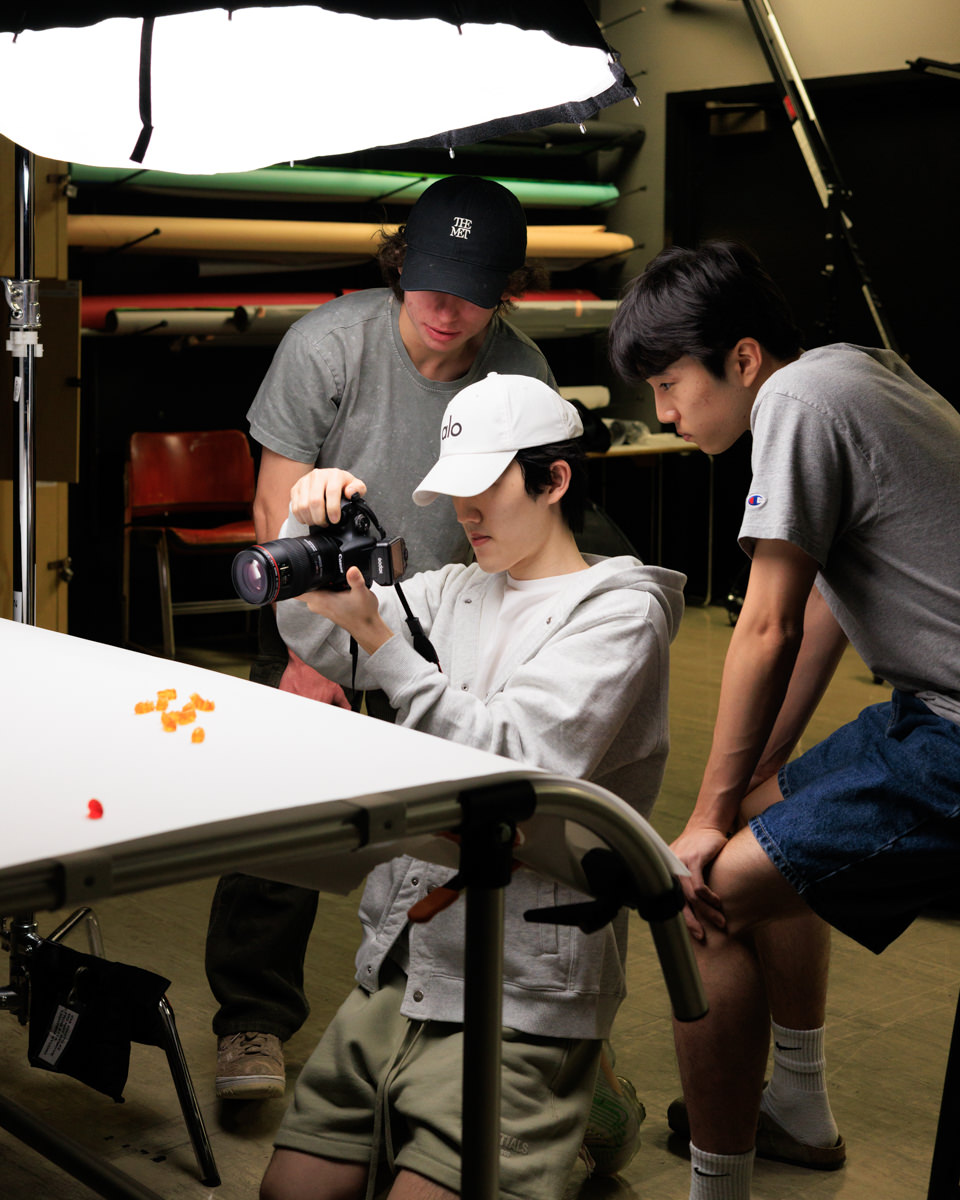
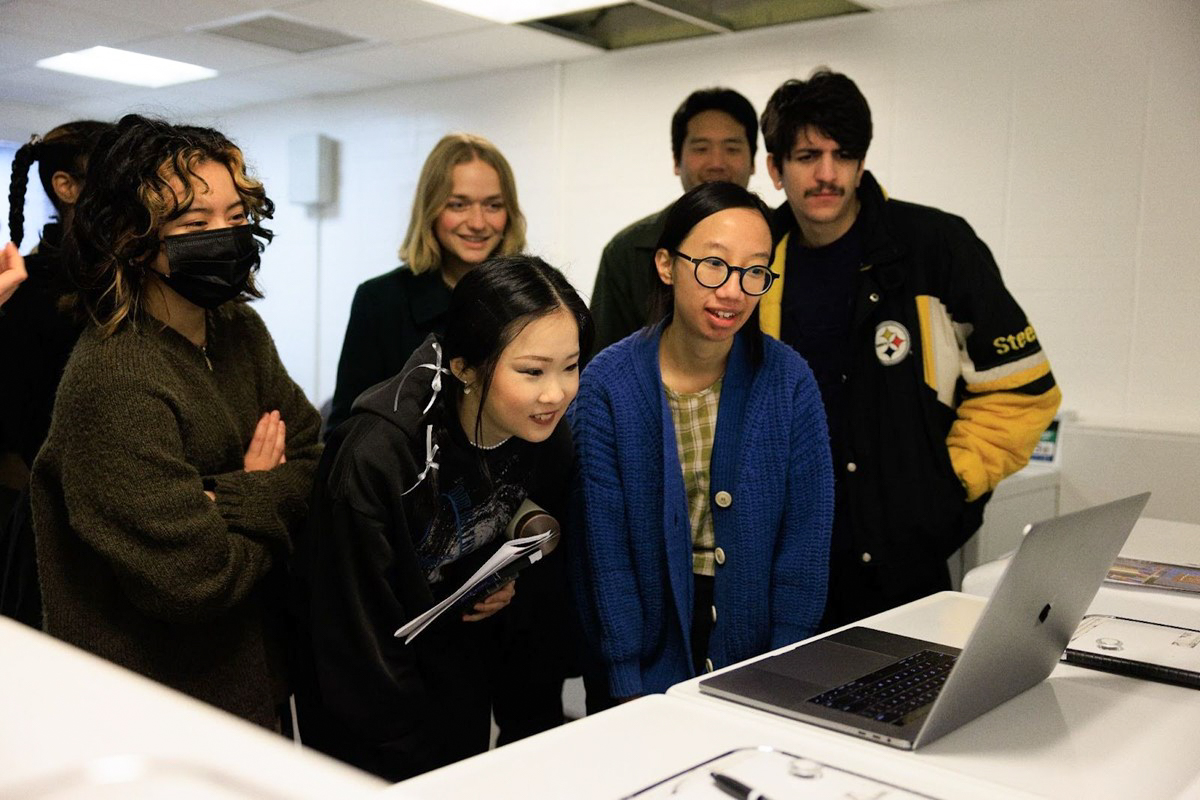
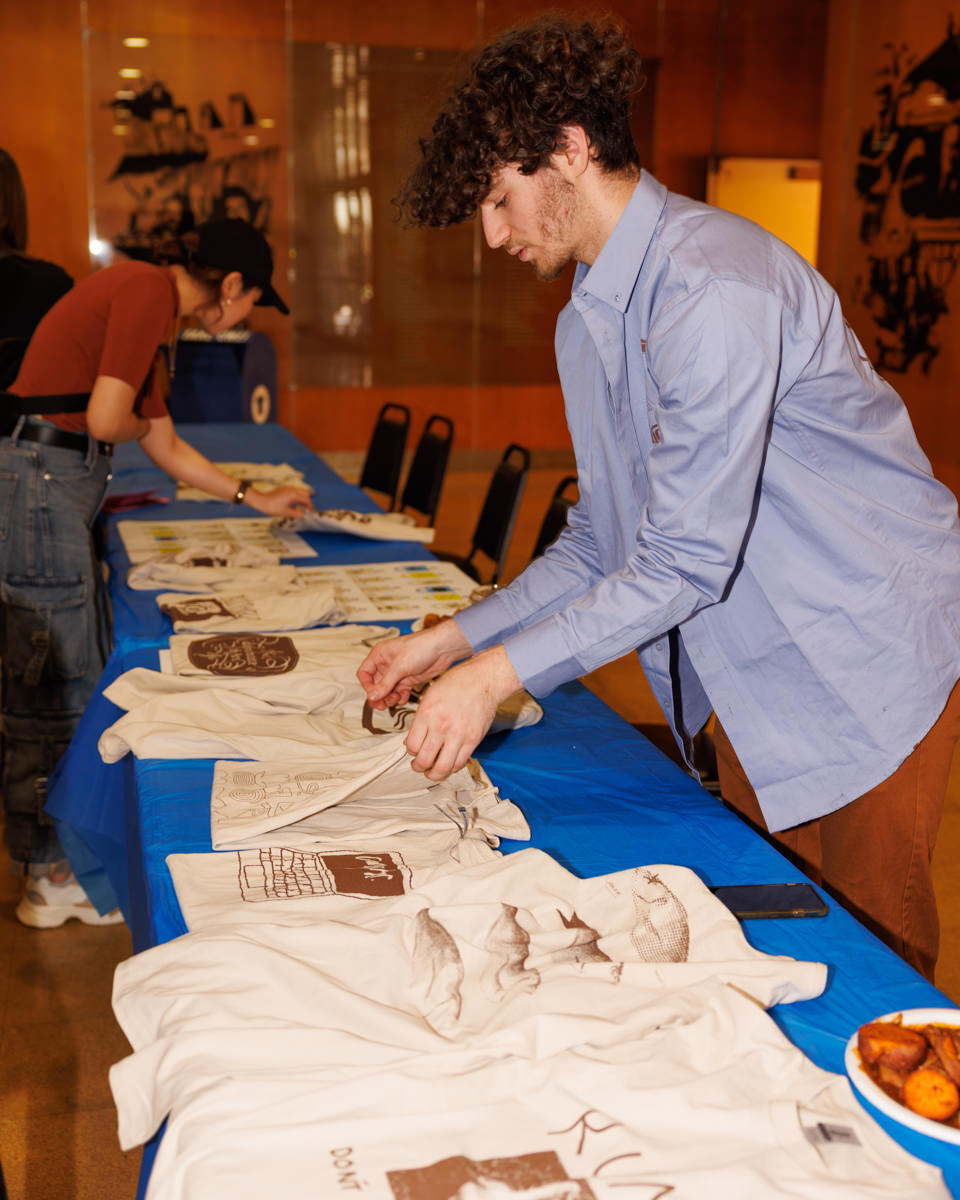
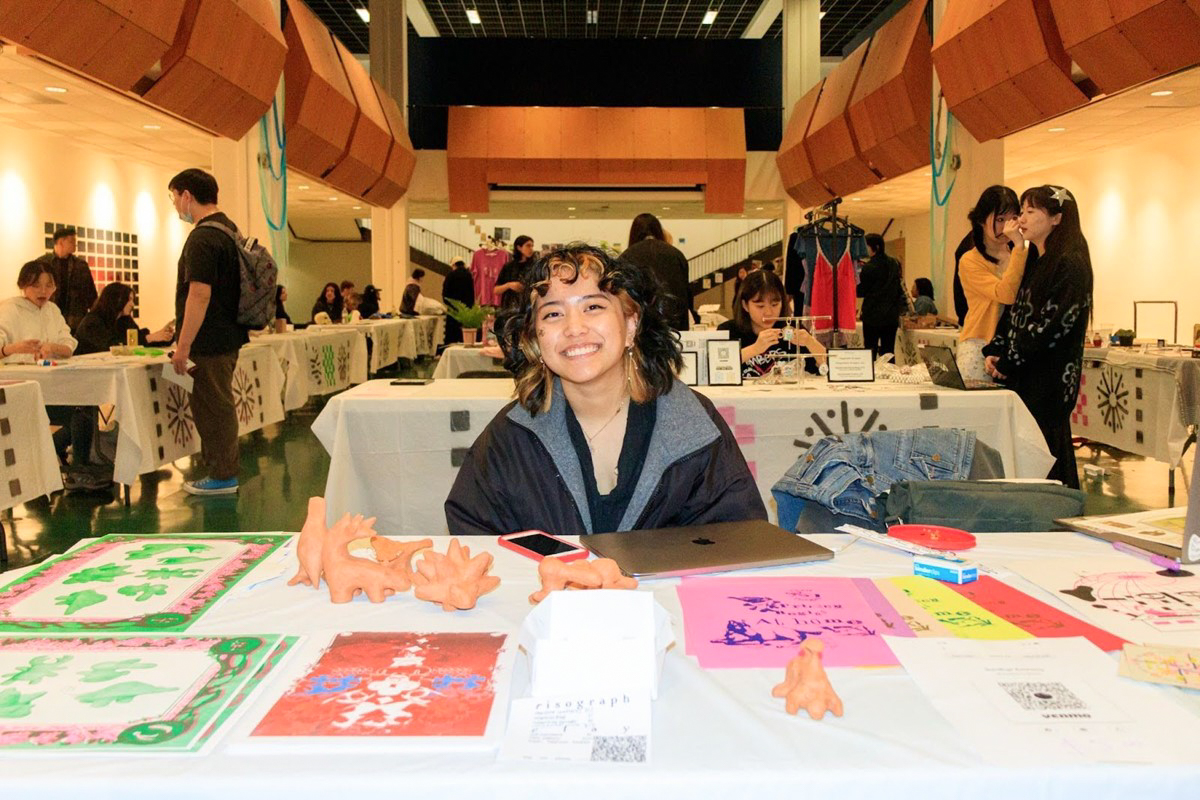

A commitment to community and preserving design history
“We can work collectively as a design community to discover, document, and preserve our shared design history,” said Louise Sandhaus (Art BFA 93, MFA 94) upon being honored as an AIGA Medalist for her contributions to the field of design. “It’s about honoring and recognizing that everything is valued, and every person is valued, and that anyone can contribute to preserving this history.”

Graphic Design alum and former faculty Louise Sandhaus. Photo: Moira Tarmy.
Studios
Graphic Design BFA
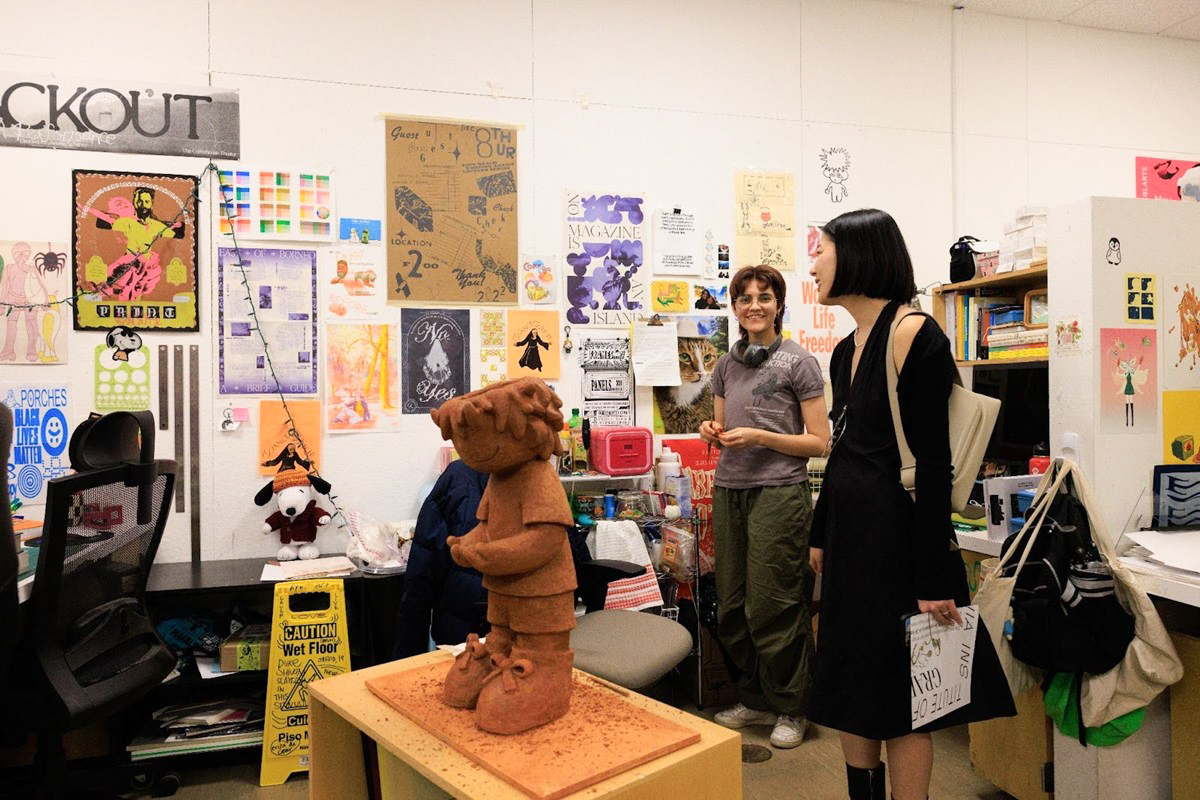
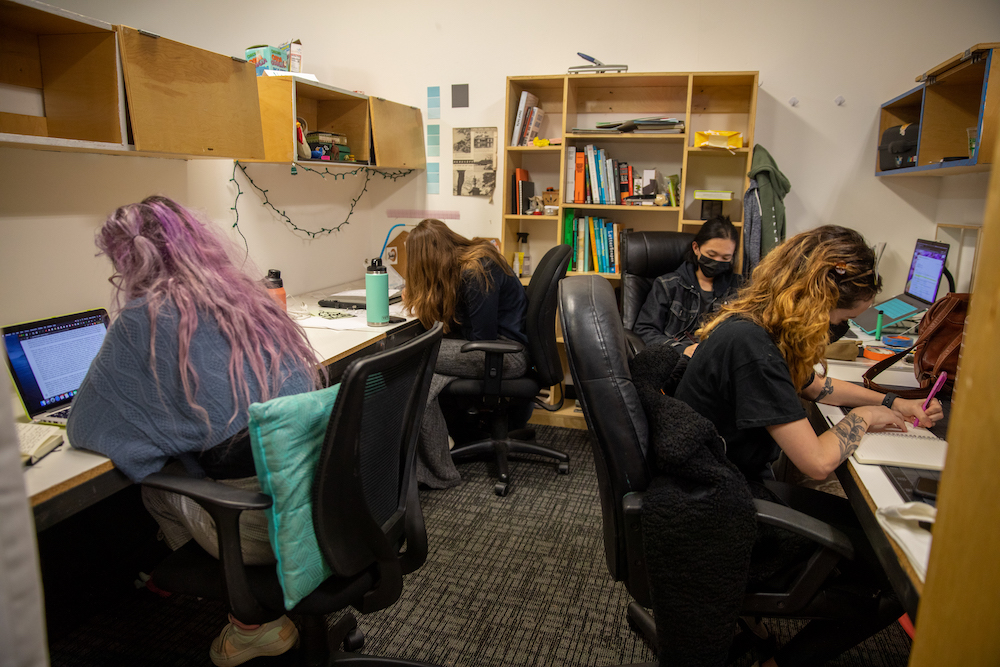
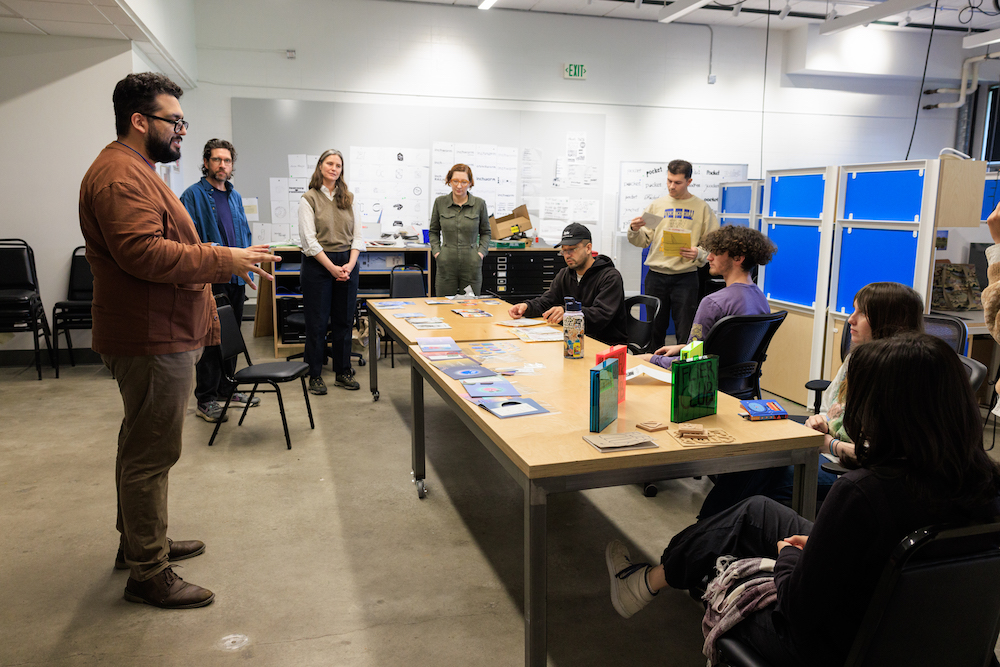
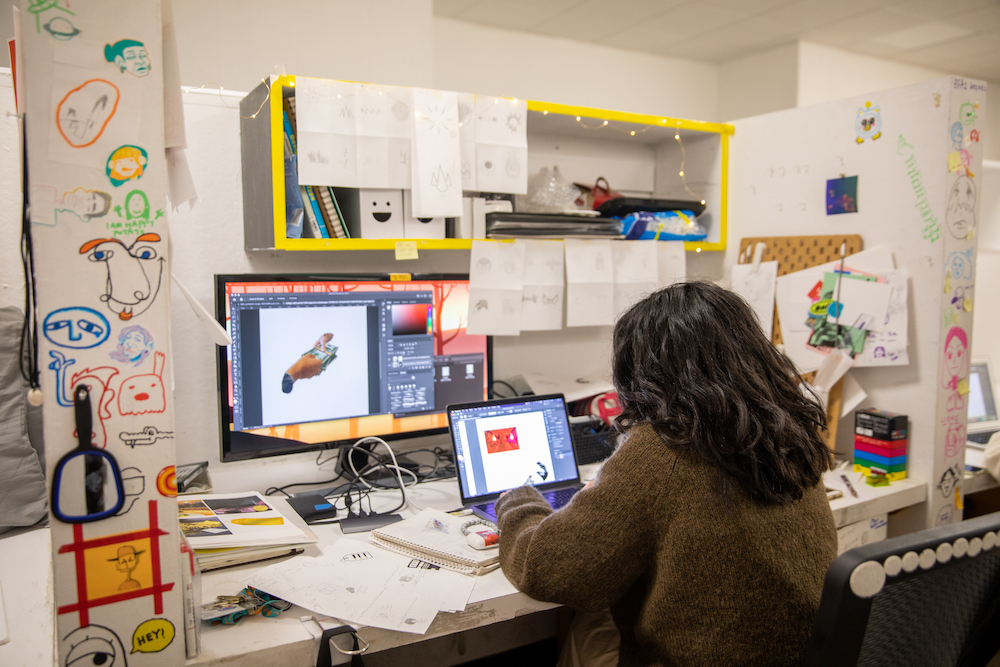
The Graphic Design programs have six shared studios, one for each BFA and MFA cohort. They are located inclose proximity and near the labs. Upper-level studios have kitchen spaces and open to outdoor courtyards. Common areas are flexible and function as classrooms, critique spaces, and work spaces for large collaborations. Each student has their own desk space for work and study with storage, flat files, and access to Wi-Fi and printers.
All studios are available to students around the clock, seven days a week during the academic year.

Want to learn more?
We got you. Our Admissions team is all about providing the information you need to decide if CalArts is right for you. We’re excited to connect with you for a tour of our legendary campus, a virtual info session, or at one of our admissions events across the country or around the world. Take the next step—we’re here to help.